Summarizing AI Is Becoming Part of Everyday Work
Consider the way you spend a typical working day; you could start off by looking at your emails, putting together a report, researching a subject, answering customers, or planning your weekly tasks. All these activities take up some time and, in many cases, involve repeating the same steps again and again. Artificial intelligence (AI) is altering the way people deal with these duties by assisting them in organizing information, coming up with ideas, and carrying out certain tasks more efficiently.
It is unnecessary to have a background in software development or to be a technology expert in order to get benefits from AI. A student may use it to grasp a subject that is hard for him or her, a freelancer can use it to produce a first draft, and a small business owner can use it to organize customer inquiries. Office workers too can make use of AI tools in order to increase their productivity by summarizing long documents, preparing meeting notes, and organizing information before making decisions.
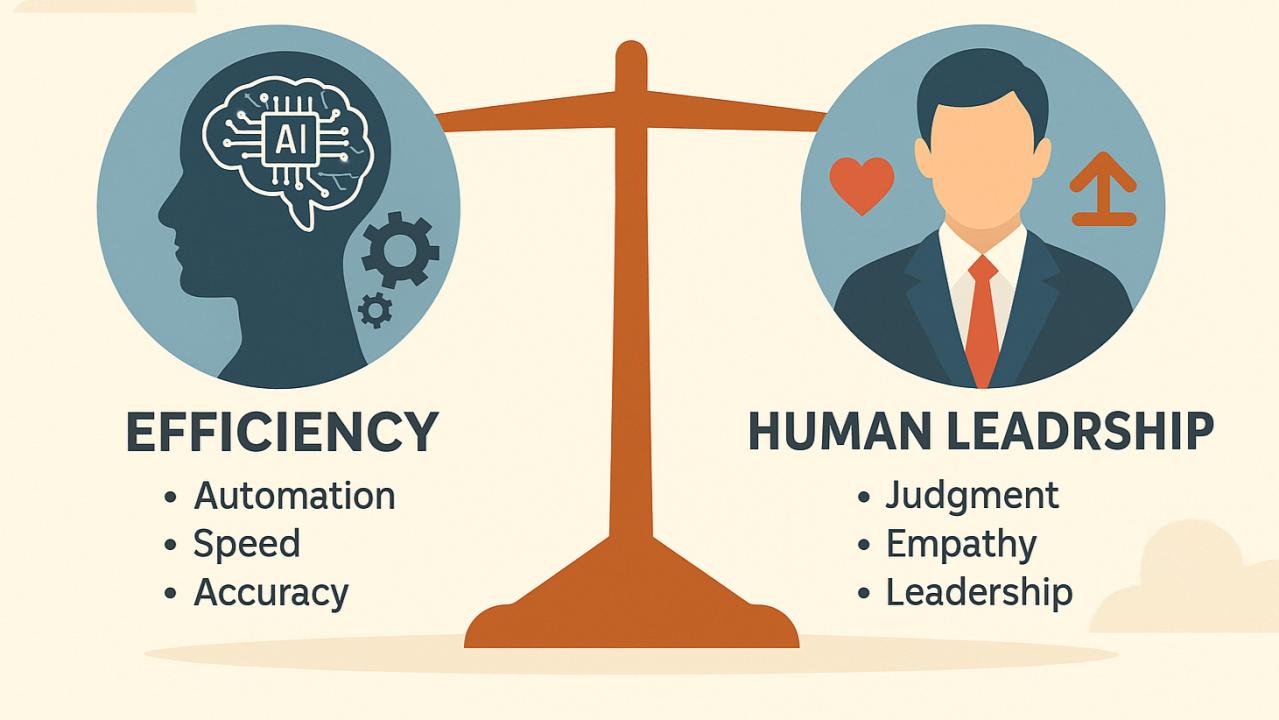
AI is by no means a magic solution capable of automatically generating accurate results; it may misinterpret instructions, make factual errors, and fail to take important context into account. The true value of AI lies in combining its machine capabilities with human knowledge, creativity, and judgment. It is essential for anyone who is looking into the use of artificial intelligence in their daily work to understand this balance.
What Is Artificial Intelligence?
Understanding AI in Simple Terms
AI means computer systems that are created to carry out tasks that usually need human-like capabilities, for example, identifying patterns, understanding language, processing information, and producing content. There are various kinds of AI systems, and they function in different manners: some detect unusual patterns in large sets of data, whereas others assist people in writing text, interpreting images, answering questions, or interacting by speaking.
Generative AI represents one kind of technology that is especially noticeable. Such systems are able to generate new text, images, summaries, computer code, and other kinds of output on the basis of instructions and the information they acquired during their development. For instance, an employee could give an AI assistant a list of meeting notes and ask it to arrange those notes into decisions, open questions, and action items.
The key point is that just because a system produces a convincing response does not mean that it actually understands the situation in the way a human would. Such AI systems generate their responses on the basis of patterns that they have learned and the context that is available to them; although they might give a useful explanation, they are also capable of giving a wrong answer that at the same time sounds completely reasonable.
That is why the most sensible thing to do is to regard AI as an assistant rather than as an absolute authority; although it can help individuals to deal with information more quickly, the person using it is still responsible for deciding whether the output is accurate, appropriate, and useful.
How AI Is Changing Everyday Work
Writing Emails, Reports, and Documents
One of the simplest ways to get started with AI at work is through writing. A great deal of time is often spent by employees on preparing emails, drafting reports, producing meeting summaries, and rewriting information for various audiences. AI is able to take rough notes and turn them into a structured message, propose a clearer explanation, or modify the tone of a document.
Suppose that a project manager has obtained several updates from various team members. Rather than beginning a report on a blank page, the manager can request an AI assistant to arrange the information given under headings like completed work, pending tasks, risks, and next steps. The manager can then go through the details, add any missing context, and put together the final report.
AI can also assist those who have difficulty writing confidently in a second language by suggesting more natural phrasing, correcting grammar, or explaining why a sentence is hard to understand. However, users should still check the final message to make certain that it accurately reflects their intended meaning and sounds suitable for the recipient.
The real benefit is not just that more words are produced; it is that the amount of effort needed at the beginning is reduced and people are given more time to concentrate on the purpose of their communication.
Researching and Summarizing Information
Research usually includes reading long documents, comparing various explanations, and picking out the information that is relevant to a specific question. AI can help by summarizing the material provided, organizing the main points, proposing research questions, and explaining any unfamiliar terms in simpler language.
For instance, if a freelancer is preparing a proposal, they will need to go over the client's requirements, determine the main objectives, and make a list of the questions that have not been answered. An AI tool can assist in organizing the information into a first draft of a brief. The freelancer has to check the original material to make sure that no important requirements have been left out or misinterpreted.
Since AI-generated answers may include inaccurate statements, obsolete details, or references that fail to support the claims made, care must be taken when carrying out research. A summary is of no use unless it gives a fair representation of the source; likewise, any suggested source should be examined and verified before it is cited in a professional report or in a published article.
A reasonable way to proceed is to use AI to organize the research process, check against reliable sources, and independently verify any important facts. Doing so allows research to be more manageable without confusing speed with accuracy.
Managing Schedules and Repetitive Tasks
So a great many of the things that people have to do every day consist more of arranging activities than of making difficult decisions. They have to plan meetings, draw up lists of tasks, sort through the requests that come in, keep a record of regular activities, and send out routine updates. Applications equipped with AI can assist in prioritizing work, suggest schedules, classify information, and spot the tasks that might need to be looked at.
Let us imagine that a small team is facing several deadlines. An AI assistant could assist in organizing the tasks into a weekly plan using the deadlines and priorities given by the team. The employees would then be able to make adjustments to the plan to take into account dependencies, unexpected delays, and the availability of other colleagues.
AI automation achieves even greater results when it is linked with other software. A company could set up a workflow that involves categorizing the inquiries it receives, sending out an approved acknowledgement, and assigning each request to the correct team. Yet in order to avoid errors spreading without being noticed, automated workflows have to have well-defined rules, appropriate access controls, and monitoring.
It isn't necessary to automate every task; for instance, a routine reminder can be handled automatically, but a delicate customer complaint should call for a personal reply. The aim must be to eliminate unnecessary repetition without compromising either accountability or service quality.
Analyzing Data and Supporting Decisions
Information is produced by businesses via their sales records, customer feedback, website analytics, project reports, and financial transactions. AI tools are able to assist in identifying patterns, summarizing trends, classifying the information, and pointing out results that are unusual and thus require further investigation.
For example, a digital marketer could use an analytics tool with AI capabilities to sort the results of their campaigns by channel, audience, or conversion type. The tool might assist in spotting areas that warrant further investigation, while the marketer then looks into possible explanations and checks whether the data available backs up those conclusions.
It is important to make this distinction since a pattern by itself doesn't prove what caused it. A fall in sales might be due to seasonal demand, a change in pricing, difficulties with the website, greater competition, or faulty tracking. Although AI can offer some suggestions, business decisions need evidence and an understanding of the broader context.
People should also take into account the quality of the information that is being analyzed. Records that are incomplete, entries that are duplicated, and measurements that are inconsistent can lead to misleading conclusions. AI is most useful when people supply appropriate data, understand the limitations of the analysis, and use the findings to assist rather than to replace sound judgment.
Improving Customer Support and Visual Content
Customer service teams can make use of artificial intelligence to sort inquiries, suggest answers to frequent questions, summarize earlier conversations, and assist staff in finding relevant information. Incorporating AI into a well-designed support system could enable customers to obtain standard answers without having to wait for a human representative.
It's not just about giving out information when providing customer support. If a customer is having a problem with a bill, has placed an order that has failed, or is dealing with a personal matter, they may also need some empathy and personal attention. The use of AI should involve detecting when a conversation needs to be escalated rather than simply offering the same general replies over and over again.
AI can also be put to use in the area of visual work. Designers, content creators, and marketing teams can make use of appropriate tools to produce initial ideas, create illustrations, eliminate backgrounds, or look at different layouts. Such capabilities can simplify the early stages of creative work, especially for individuals and small teams that have limited resources.
The results still require human inspection since the images produced by the system might have distorted details, give misleading representations, or include elements that are inconsistent with a brand's identity. Teams should also verify the licensing of the images, check the privacy requirements, and review the terms relating to commercial use before publishing any content that has been generated or edited by AI.
How Different People Can Use AI
Students, Freelancers, and Office Employees
Students are able to use AI to break down difficult subjects into simpler explanations, to produce practice questions, to arrange their revision schedules, and to spot the topics that require more focus. For instance, a student studying statistics could request a basic explanation of standard deviation, then ask for a worked example and a short quiz as well. The student must still work through the problems on their own and refer to the course materials to verify the explanation. AI functions most effectively as a learning companion rather than as a shortcut that takes the place of understanding or academic effort.
Freelancers and writers can employ AI in order to come up with ideas for articles, to organise their proposals, to summarise client briefs and to verify the clarity of their own writing. For example, a freelance designer could use it to convert the client's vague description into a list of requirements prior to starting the creative task. A writer might request different headline options and then select one that is appropriate for the intended audience and publication. However, original thought, fact-checking, and editorial judgment are still essential, especially when the work is published under the freelancer's name.
Staff members are able to use artificial intelligence to prepare meeting agendas, summarize documents that have been approved, organize updates about projects, and draft standard forms of communication. While such applications can lessen the amount of effort required for administrative tasks, the actual benefit will vary according to the specific task, the tool being used, and the quality of the information provided. Before uploading internal documents or using external AI services for work-related activities, employees should adhere to their organization's policies.
Small Business Owners and Digital Marketers
Small business owners usually have to look after a number of different responsibilities at the same time, such as sales, customer service, marketing, operations, and administration. With the aid of AI, they are able to draft product descriptions, prepare answers to typical enquiries, organize customer feedback, and produce preliminary plans for business activities. For instance, a local service provider could use an AI assistant to draw up a first draft of a monthly customer communication plan and then modify it to take into account the actual services, prices, and availability.
Digital marketers are able to use AI to come up with content ideas, classify keywords according to search intent, prepare article outlines, analyze campaign reports, and investigate various advertising messages. Such applications can assist teams in getting from a blank page to a feasible starting point. Nevertheless, marketing content produced by AI still requires original insights, accurate claims, consistency with the brand, and a clear grasp of customer needs.
Small businesses ought to begin by carrying out tasks that are of low risk and easy to check. They must not assume that a business plan, an advertisement, or a financial recommendation produced by an AI is automatically accurate. The best outcomes are achieved when business owners combine their practical experience with useful automation and then assess whether the changes actually enhance their workflow.
Benefits of AI in the Workplace
A major advantage of using AI in the workplace is that it provides the possibility of cutting down the amount of time spent on certain routine tasks. For example, preparing a standard email, arranging a list, giving a summary of a document, or sorting out enquiries can involve less manual work if the right tool is employed. The time that has been saved can then be put towards customer relationships, creative thinking, planning, or other types of work which require personal attention.
AI can also assist in the exploration of ideas. If someone is preparing a presentation, they can ask for alternative arrangements, examples, or questions that the audience might pose. A business owner can compare different approaches to a customer communication problem before deciding which one is suitable for the situation. Although this does not ensure a better result, it can provide people with more points to consider.
A further advantage is accessibility. Features such as language assistance, speech-to-text functions, summaries, and simpler explanations can enable people to interact with information in ways that match their own requirements. Moreover, certain tools may offer help to those who have difficulty with certain kinds of writing, reading, or organizing tasks, although the extent to which they are suitable will differ from person to person and depending on the application.
The benefits do not happen automatically; it is possible for an organisation to spend more time fixing errors produced by AI than the time it saves when creating the original work. One useful method of assessing a tool is to compare the entire workflow both before and after it has been adopted, taking into account review time, accuracy, cost, privacy, and the quality of the final result. Productivity must be judged according to useful outcomes rather than just the speed at which the content is generated.
Limitations and Risks of Using AI
AI systems are capable of giving inaccurate information, of misunderstanding instructions, or of expressing uncertain conclusions with too much confidence. This is especially significant in the case of legal requirements, medical information, financial decisions, technical instructions, or current events. People should check important claims against reliable sources rather than regard a fluent answer as evidence of accuracy.
Privacy is also a matter of concern. It is possible for customer records, details about employees, confidential business plans, passwords, or unpublished client material to be put at risk because they are uploaded to a service that has not been approved, and the risks involved may not be completely clear to users. Before you use an AI tool, you should check the terms relating to how the tool handles data and also refer to your organisation's policies. In cases where sensitive information is concerned, it is necessary to use approved systems and to share only the information that is actually needed for the task.
Bias can also have an effect on the results produced by AI. When a system reflects biased patterns that it has picked up from its training data or from the information given to it, the output it generates might put certain groups at a disadvantage or strengthen existing assumptions. This is important in cases where AI is used to assist with recruitment, performance evaluations, customer eligibility, or other decisions that have an impact on people.
In the end, overdependence can have a weakening effect on independent thinking; when employees accept all suggestions without verifying them, they may eventually lose faith in their own judgment or fail to notice important details. The NIST AI Risk Management Framework provides advice on how to understand and manage AI-related risks, such as those concerning reliability, privacy, security, and accountability. For AI to be used responsibly, it is necessary to have the right tools as well as people who know when to question their results.
How to Start Using AI Responsibly
You don't need to carry out a large technology project in order to get started; instead, try this practical method—choose one task that occurs regularly, test an appropriate tool, and then assess the results before increasing the tool's use.
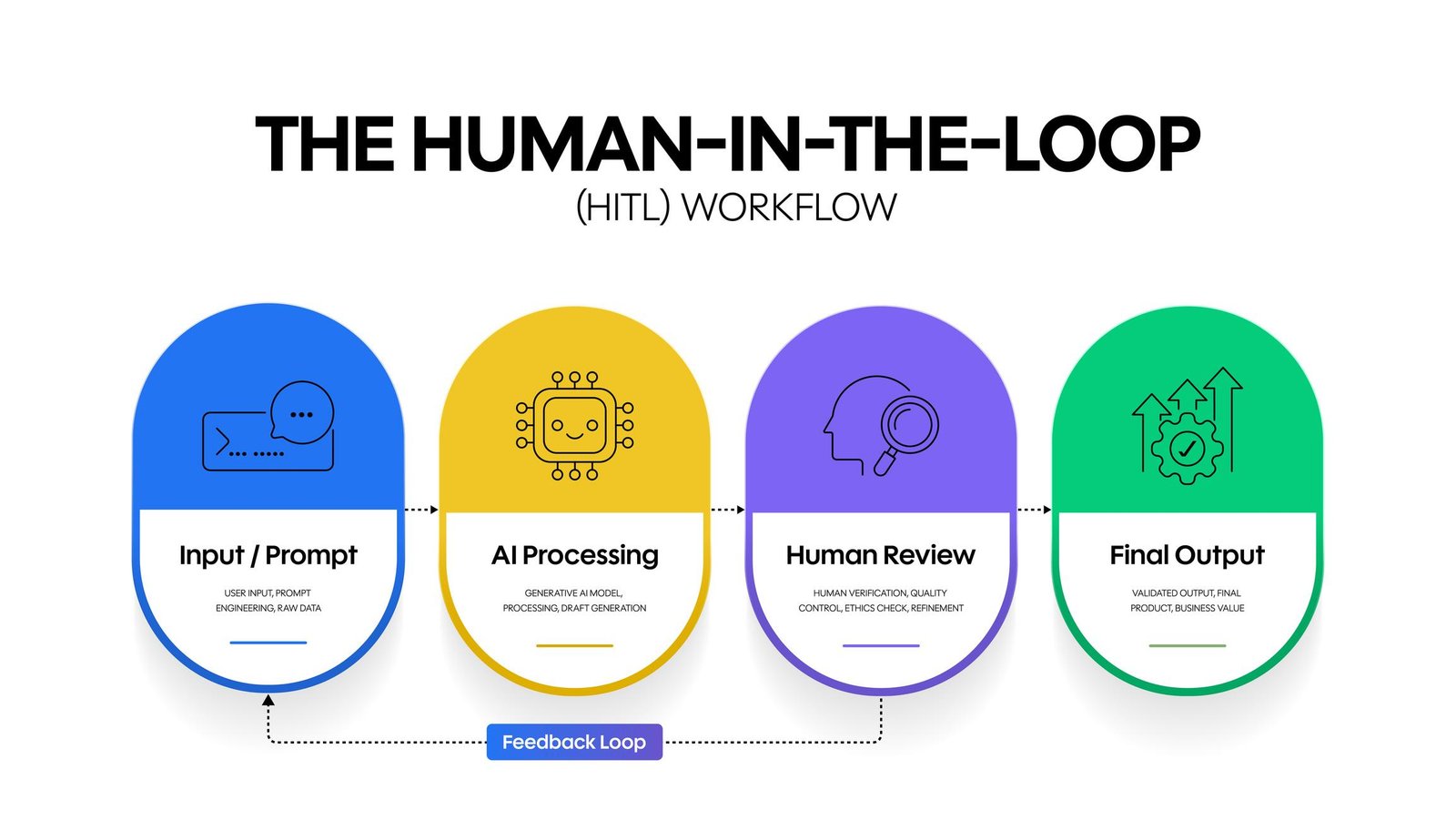
Start by selecting a specific task; for example, drafting routine emails, organising meeting notes, or summarising a non-confidential document, and then decide what a successful outcome should mean.
2. Choose the right tool. Make sure that the tool is suitable for the task at hand, within your budget, offers adequate privacy protections, and adheres to any requirements set by your workplace. The fact that a tool is available for free does not mean that all of its features or data practices are appropriate for use in a professional context.
3. Provide clear instructions by explaining the objective, the intended audience, the context, the required format, and any limitations. For instance, request a brief project update based only on the provided notes, with separate sections for the work that has been completed, the tasks still outstanding, and the deadlines. Generally, clear instructions make it easier to evaluate the output.
4. Carefully examine the results; check all factual claims, names, dates, calculations, the tone, and any missing details. To verify important information, refer to the original documents or to reliable sources.
5. It is necessary to protect any confidential information; before submitting sensitive data to a tool, you must ensure that its use has been approved and that the appropriate safeguards are understood. You should comply with the relevant privacy rules and internal policies.
6. Assess the results by comparing the time taken, the number of corrections, the final quality, and any new risks; only continue to use the tool if it offers a meaningful benefit.
This approach means that the adoption of AI becomes a practical experiment instead of being based on hype, and it also enables people to find out which tasks are appropriate for automation and which still need direct human involvement.
Will artificial intelligence take the place of human workers?
It is a common concern whether AI will replace human workers, but the answer varies according to the type of occupation, the tasks involved, the technology that is adopted, and the decisions taken by organisations. A great many jobs involve a mix of routine duties and responsibilities which call for judgment, communication, problem-solving and an understanding of the particular situation. AI can help with some of these activities, but it is not able to carry out the whole role by itself.
The 2025 research update by the International Labour Organization showed that about one quarter of workers around the world were engaged in jobs to some extent involving generative AI. The report stressed that being exposed to such technology does not necessarily mean that a job will be lost; in fact, many occupations are more likely to be transformed than abolished.
International Labour Organization
For instance, although AI can assist a marketing professional in carrying out an initial campaign analysis, the professional still has to understand the business objective, interpret customer behaviour, check the data, and decide on the course of action. In a similar way, an AI assistant might prepare a response for a customer, but it is the experienced employee who deals with a special complaint that involves empathy and negotiation.
People can get ready by acquiring abilities that complement AI, such as critical thinking, communication, knowledge in a specific field, data literacy, and the capability to assess automated outputs. Employers also have a part to play by offering training, setting clear expectations, and making sure that the technology is introduced in a responsible manner. The future of work will depend not just on what AI is able to do, but also on the way in which people and organizations choose to use it.
The Future of AI in Everyday Work
The development of AI is still ongoing in the areas of writing, research, data analysis, software, and digital collaboration. Nowadays, these tools can handle various kinds of information such as text, images, audio, and documents. In some cases, the systems are also capable of linking with business applications in order to assist with multi-step workflows, though there is considerable variation in their capabilities and reliability.
Such developments could increase the relevance of AI assistance for individual positions. An employee could then use an approved system to produce a meeting brief from authorized documents, spot any actions that have not been completed, and draft a follow-up message for review. While such workflows may be useful, they do require the right level of permissions, reliable source information, and definite boundaries regarding what the system can do without having to have human approval.
The future cannot be completely predicted since technological progress does not ensure that all workplaces will use the same tools, attain the same improvements in productivity, or have the same effects on employment. Factors such as costs, regulations, the state of the infrastructure, security requirements, the need for worker training, and customer expectations will all affect the extent to which these tools are adopted.
The best thing that individuals can do is to stay curious as they develop a solid foundation. They should learn how to give clear instructions, check evidence, safeguard information, and identify the limitations of automated systems. AI skills will be most useful when they enhance the existing capabilities that professionals already have rather than replacing the knowledge necessary to carry out their jobs well.
Conclusion
AI is altering the way people carry out their daily work by assisting them with writing, carrying out research, organizing tasks, analyzing information, supporting customers, and exploring creative ideas. When used in a thoughtful manner, it can cut down on repetitive work and enable both individuals and businesses to deal with their duties more efficiently.
AI also poses risks concerning accuracy, privacy, bias, and overdependence, so human review and responsible decision-making are essential. Practical measures people can adopt when incorporating AI into their daily workflow include selecting the right tasks, protecting confidential information, and checking the results.
The aim should not be to use AI in all situations; rather, it is to recognize the areas in which it is useful and the ones where human expertise is still required. As AI is incorporated into an increasing number of work processes, the capacity to use it in a critical and responsible manner will become an important professional skill.
How are you incorporating AI into your day-to-day work? Please share your experiences, mentioning the kinds of tasks it assists with and the difficulties you have come across.
Further Reading and Resources
The following authoritative resources provide additional information on AI risks, responsible adoption, and the future of work. The links point to verified institutional pages.
1. Artificial Intelligence Risk Management Framework — NIST
Publisher: National Institute of Standards and Technology
Official framework for identifying and managing risks associated with AI systems. Useful for businesses developing responsible AI practices.
Read the NIST AI Risk Management Framework
2. NIST AI Resource Center (AIRC)
Publisher: NIST
Provides practical resources, technical guidance, and materials to evaluate and manage AI systems responsibly.
Explore the NIST AI Resource Center
3. Generative AI and Jobs: A 2025 Update
Publisher: International Labour Organization
Examines how generative AI may affect occupations and explains why exposure to AI does not automatically mean a job will disappear.
Read the ILO's 2025 research update.
4. OECD Artificial Intelligence Policy Observatory
Publisher: Organisation for Economic Co-operation and Development
Offers policy analysis and resources covering trustworthy AI, data privacy, generative AI, and the future of work.